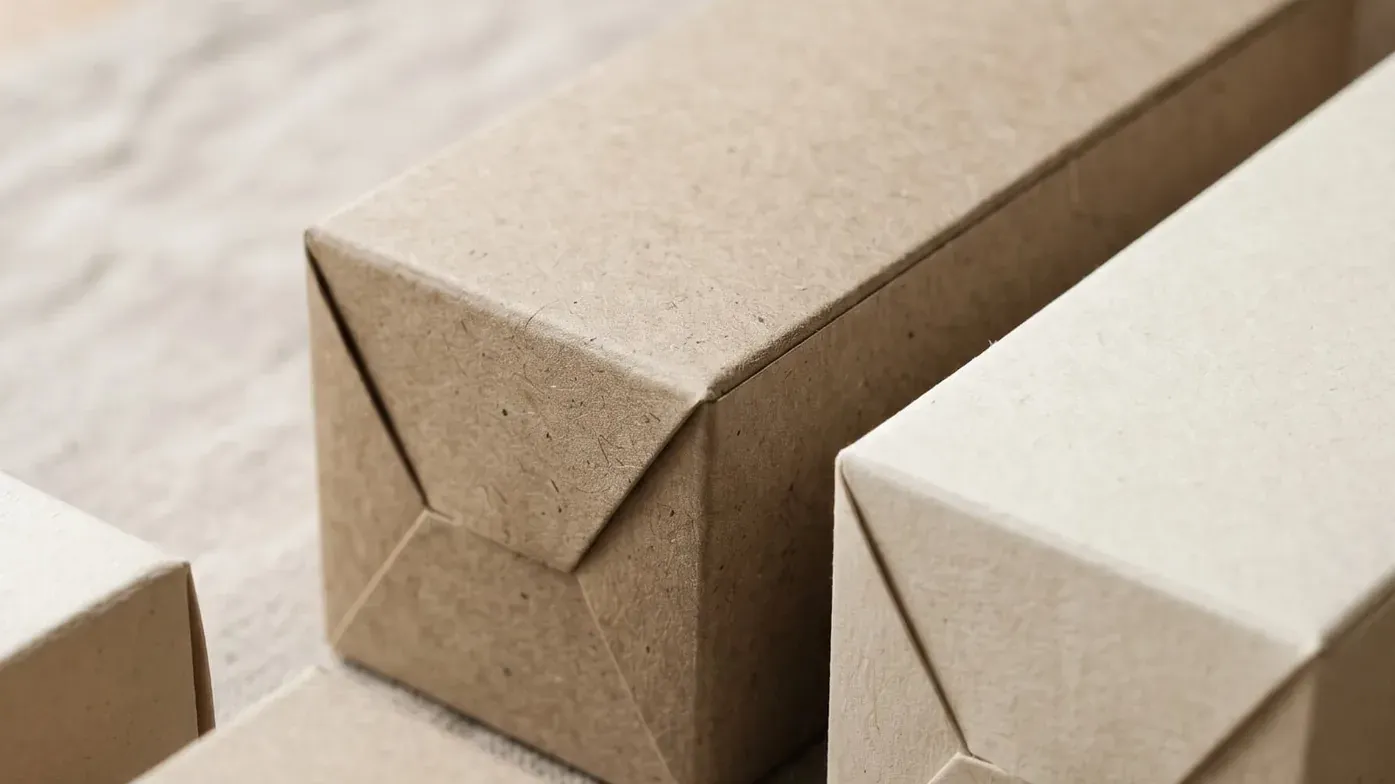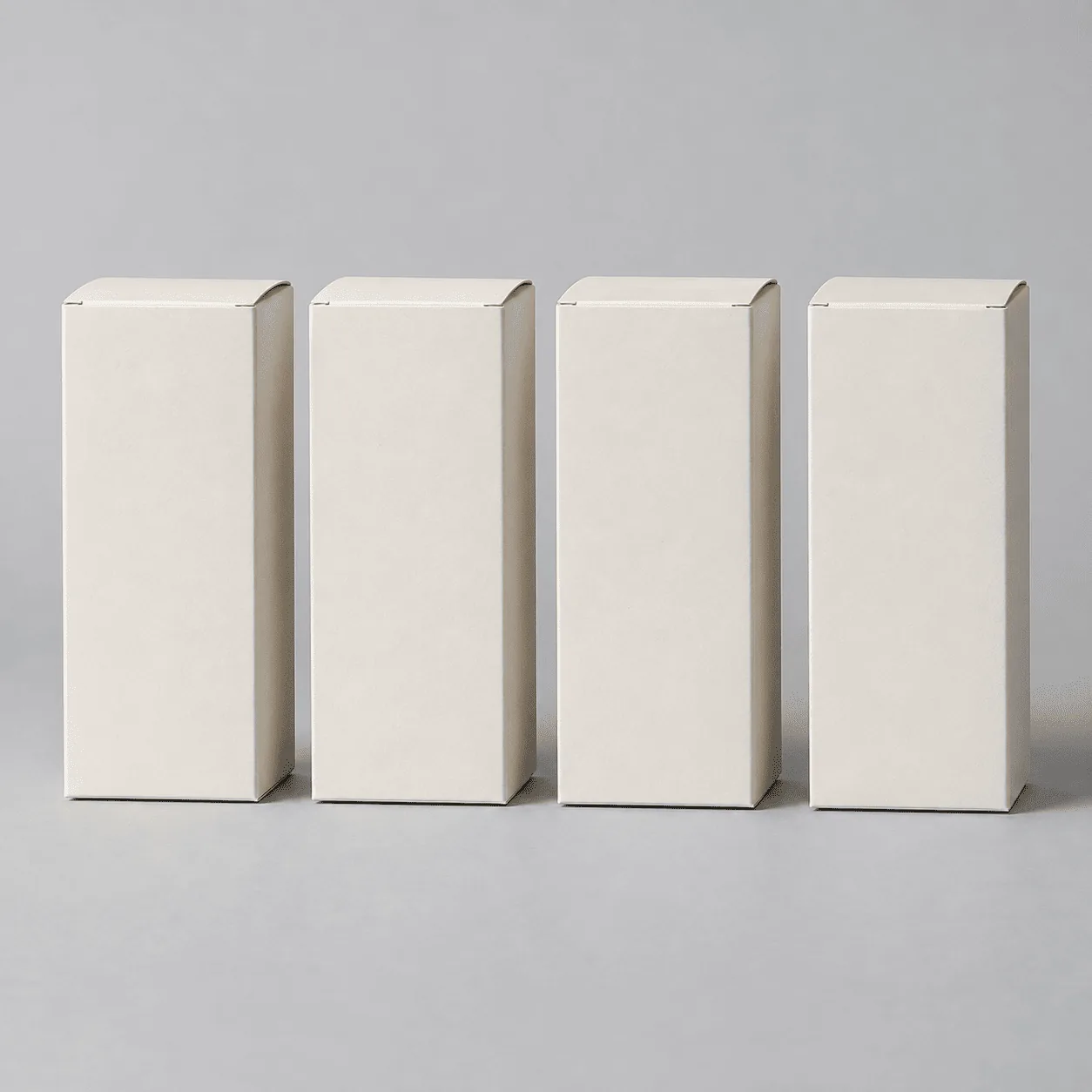
Board weight is one of the quietest decisions in cosmetic packaging, and one of the most consequential. Get it right and the box feels solid, protects the product, and runs cleanly on the line. Get it wrong and you end up with boxes that crush in transit, look flimsy on the shelf, or cost more than they need to.
This guide explains what GSM means, how to choose the right board weight for skincare, fragrance, and gift sets, and the trade-offs worth understanding before you sign off on a spec.
Folding boxes vs folding cartons: same product, two names
In packaging, folding boxes and folding cartons are two names for the same product. A folding carton is a printed paperboard box that is die cut, creased and glued flat, then folded into shape when it is filled. Brands and agencies often say folding boxes, while printers and converters usually say folding cartons. Both describe the box your cream, serum, perfume or candle sits in. Everything in this guide about GSM applies to folding boxes and folding cartons alike, because the material and the construction are the same.
What GSM means on a folding carton
GSM stands for grams per square metre. It is the weight of the board measured over a fixed area, and it is the most common way suppliers describe the thickness and sturdiness of the material your box is made from. A higher GSM generally means a heavier, stiffer board.
It helps to separate two ideas that often get mixed up. GSM measures weight, while caliper (given in microns or points) measures thickness. The two usually move together, but not always, because different board types pack their weight differently. For most conversations with a supplier, GSM is the number you will work with, but it is worth knowing that thickness and weight are related rather than identical.
Typical GSM ranges for cosmetic folding boxes
There is no single correct number, because the right board weight depends on what goes inside the box and how it travels. As a rough guide, most cosmetic folding boxes fall between 300 and 450 GSM.
Lighter boards, in the region of 250 to 300 GSM, suit small, light items such as sachets, single sample sizes, or lightweight sticks. They fold easily, cost less, and work well when the box does not need to carry much weight or stand up to rough handling.
Mid-range boards, around 300 to 350 GSM, are the workhorses of cosmetic packaging. They handle most creams, serums, and standard retail items, giving a reassuring feel without adding unnecessary cost.
Heavier boards, from 350 to 450 GSM and above, suit glass bottles, fragrance, and anything where the box needs to feel substantial in the hand or protect a fragile primary. The extra stiffness resists denting and holds a crisp shape on the shelf.
These are starting points, not rules. The right answer always comes back to the specific product.
How to match board weight to your product
Start with weight and fragility. A glass fragrance bottle asks more of a box than a plastic tube of the same size. Heavier or more delicate primaries generally call for a heavier board, both to protect the contents and to make the box feel appropriate to what is inside.
Think about size and structure next. A tall, narrow box for a serum dropper behaves differently from a short, wide box for a cream jar. Larger panels flex more, so a bigger box often needs a heavier board than a small one to feel firm rather than floppy.
Consider how the product travels. A box that ships inside a protective outer carton can sometimes run lighter than one that sits exposed in e-commerce shipping. If your packaging takes knocks on the way to the customer, a sturdier board earns its place.
Finally, think about the unboxing. The moment a customer picks up the box, weight communicates quality before they even open it. A box that feels too light can undercut an otherwise considered product. This is not about going as heavy as possible, but about matching the feel to the positioning.
The trade-offs to weigh
Heavier board is not automatically better. Every step up in GSM adds material cost and shipping weight, and beyond a certain point the customer cannot feel the difference anyway. Spending on board the buyer will never notice is wasted money.
There is also a folding and running consideration. Very heavy boards can be harder to fold cleanly and may need different creasing, which matters for how the finished box looks at the edges and how smoothly it runs in production. A good supplier will flag this early rather than after the first run.
Coatings and finishes interact with board choice too. A soft-touch laminate or a heavy foil changes how the surface behaves and can affect both the feel and the recyclability of the finished box. Board weight is one input among several, and the best results come from deciding them together rather than in isolation.
A simple way to get it right
The most reliable approach is not to guess from a spreadsheet. It is to feel samples in the weights you are considering, with your actual product inside if possible. The difference between 300 and 350 GSM is obvious in the hand and almost invisible on paper. Holding a few options, ideally a dieline mock-up at the candidate weights, tells you more in two minutes than any chart.
Bring your supplier into the decision early. Share the primary you are packing, how it ships, and where it sits on the shelf. A supplier who works with cosmetic folding boxes every day will steer you toward a sensible range and away from over- or under-engineering the box.
Frequently asked questions
- What is the best GSM for a cosmetic box?
- Most cosmetic folding boxes work well between 300 and 450 GSM. Lighter products like sachets can use 250 to 300 GSM, while glass bottles and fragrance often need 350 GSM or more for protection and feel.
- Is higher GSM always better for packaging?
- No. Higher GSM adds material cost and shipping weight, and past a certain point the customer cannot feel the difference. The goal is to match the board to the product, not to go as heavy as possible.
- What is the difference between GSM and caliper?
- GSM measures the weight of the board per square metre, while caliper measures its thickness. They usually move together, but different board types can carry their weight differently, so they are related rather than identical.
- How do I know which board weight to choose?
- The most reliable way is to feel samples at the weights you are considering, ideally with your product inside. Sharing your primary, how it ships, and where it sells with your supplier will help narrow the range quickly.
Where Etiteks fits
Pack by Etiteks makes cosmetic folding boxes for beauty brands across Europe, and we work with formulators and designers on board weight, dieline, and finish so the box suits the product rather than fighting it. Materials are FSC and Vegan certified, and production runs through the EU-Turkey Customs Union with zero import duty into the EU. If you want to judge board weight properly, we can send a few samples so your team can feel the options against your own product.